Maximize yields with our agronomy expertise today!
Expert Crop Advisory Services
Maximize yields with our agronomy expertise today!
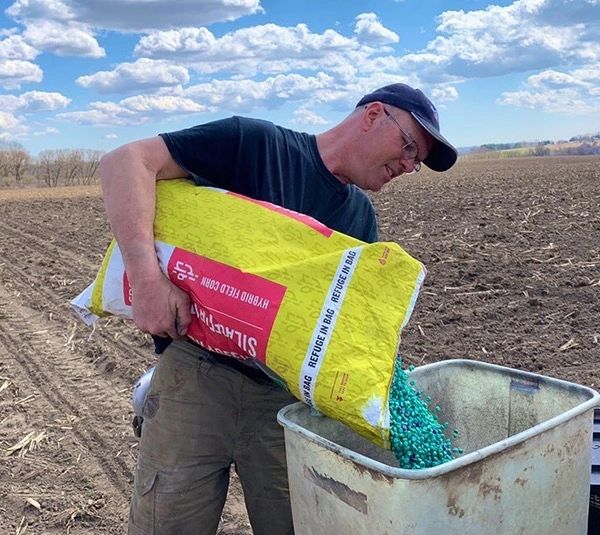

I believe that all crops have a 100% yield potential in a perfect growing environment with no challenges. The yield goes down with the many challenges throughout the growing season
This is brought out in a recent article in the February 2026 issue of crops and soils
“Seeds of Change”
It gives an overview of the history of the crop production trials of Ohio for the past fifty years. In 1972 corn yields were 120-150 bu /a. The rise of seed treatments creates new challenges in evaluating variety performance in the crop trials since “it’s not a true genetic comparison,” says Ohio State’s Laura Lindsey. In the first years we were producing 120-150 bu corn over time we added new genetic improvements and four or five GMO traits started adding on strip till and conservation till methods and today in 2025 corn yields were double that at 240-270 bu/A.
Photo by Kaitland Miller.


The pilgrim planted maize from the Native Americans which was much like volunteer corn sprouting from the previous crop. This corn didn’t look much like our uniform plant culture of todays corn fields. All the genetic variation was expressed some good. Some not so good. But a natural selection process took place that we needed to see the big improvements that we have today.
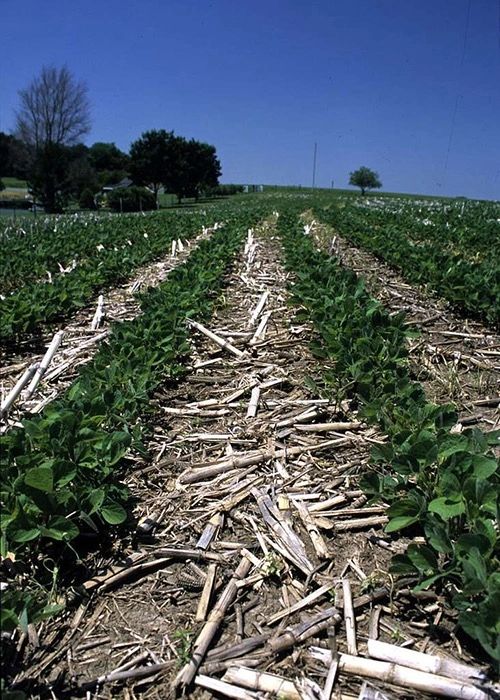
“In 1972–1978, 100% of the fields in the trial were all conventional till,” he says. “In 1979, the first reported no-till field came in as a practice for our performance trials, and no-till started to expand over time. By 1996, we had the first report for stale seedbed, which is a reduced tillage practice aiming at better weed control. By 2008–2010, only about 15% of the fields in the trial were still conventional till with the rest being minimum or reduced till. From 2013–2020, strip-till was introduced. By 2021, none of our fields in the trials had conventional till, The pilgrim planted maize from the native Americans which was much like volunteer corn sprouting from the previous crop. This corn didn’t look much like our uniform plant culture of todays corn fields. All the genetic variation was expressed some good. Some not so good. But a natural selection process took place that we needed to see the big improvements that we have today.The adoption of crop rotations and reduced tillage accompanied yield improvements in the past 50 years. Photo courtesy of USDA.

John Robert Bedtke,
passed away on December 22, 2025, at the age of 75.
For 46 years, John was the proud owner and sales manager of Bedtke Brothers Feed and Seed, working alongside his brothers, Jim and Robert. He often reflected on the business, as one of his greatest accomplishments. John was not just an entrepreneur;
He shared his knowledge with those he worked with and helped others to build a business while in the hard beginning years. For this I will always be forever grateful. He truly was a great Seedsmen one of the pioneers for LG when the French company Lima Grain purchased the marketing rights in North America in 2000, and join even traveled to Paris on a Seed Trip with LG.

A Seedsman works through even unforeseen problems
A Seedsman meets those needs using the best seed available
Dean Louis Thompson at Iowa Srate lectured all the Entering freshman in the Agromomy major. I was there in 1979.
He spoke of 11 year cattle cycle and 21 year major cycles.
He knew of El Niño but he expanded these cycles to its effect on the farmer. And his showed predictable cycles from the past and predicted an accurate future for grain prices
Hay prices and cattle prices.
In 1979 he told us who were paying attention that the late
80 ‘s would be good cattle prices. In my seed career in
Southern Minnesota and later in southeastern Iowa I saw the greatest drought in my life time in 1988. I had farmers crops that were 30 bushel corn, 30 bushel beans and 30 bushel oats. As all the feed and grain
became too expensive to feed cattle the supply of cattle fell to low levels and it took 5 years to recover. Then I saw the cycle repeat and yes 2025-26
Is a major cycle year for cattle
Prices being high and it could stay high until we recover in 2029. What gets rid of the feed supply is the crops that
are poor the years previous to the cattle price increase.
Dean Thompson started his chart with the most severe winter in 1889.
Here is my experience in the
Upper Midwest were I lived.
Moderate crop years drives down cattle numbers.
1978
1989-90
2002-03
2009-10
2021-23 Droughts and western fires.
Choosing The Seedsmens Warehouse means you have a friend you an count on
Today | Closed |

We use cookies to analyze website traffic and optimize your website experience. By accepting our use of cookies, your data will be aggregated with all other user data.